
I've been thinking about the portrait of a good person.
In the first pages of Allen Levi’s novel Theo of Golden, Theo, an 86-year-old man moves alone into the small Georgia town of Golden. For dozens of brief early chapters we find him engaged with every level of the small town’s citizenry: an injured and hospitalized little girl and her widowed father; a homeless women who roams the pages on her bicycle and insists on bringing it with her, even into church for a memorial service; a wealthy, worldly business consultant from whom Theo rents a lavish apartment; an ambitious cello student and a famous painter; an impoverished and self-pitying book seller and a young couple who’ve opened the coffee shop around which many of the stories revolve.
BECOME A FREE SUBSCRIBER TO I’VE BEEN THINKING

For the two weeks it took me to make my way through the novel, it was refreshing for my soul to escape an unnecessary Mideast war, immeasurable public corruption and greed, racist violence, the Epstein files, and the pains of my own aging to look in on Theo’s most recent encounter with yet another of Golden’s populace. Page after page, incident after incident, this stranger treats each person he meets with kindness, rapt attention, and a seemingly endless desire to know more about each of them. He engages in every one of these new relationships with empathy, decency, and affection. There are brief, teasing hints that we may not yet know all there is to know about Theo; perhaps there is a dark side, not just of personal suffering, but of personal corruption. As I read, I began to wonder about what we didn’t know, and whether this positive portrait of a good human being would hold up.
My suspicion continued to grow. Can anyone be this consistently good? Is there a person with this curiosity and this capacity for empathy day after day? Could I think of anyone I’ve known in the real world who comes even close this man’s exquisite character? No - the only person who came close was dragged up from my memory of forty years ago when I read about the equally fictional Prince Myshkin, a deeply faithful and loving man who is the hero in Dostoevsky’s novel, The Idiot. Dostoevsky reflected on his own creation with this enduring observation:
The main idea of the novel is to depict the positively good man. There is nothing more difficult than this in the world, especially nowadays. . . the task is immeasurable.
Dostoevsky’s reflection seems as true to me today as it did to him when he published his serialized novel in 1868-1869. Both Myshkin and Theo are creations born and raised in the imaginations of these two brilliant writers and set before us to tease, provoke, and ignite our imaginations with the dilemma of whether being this kind of “good person” might be possible for us.

What do we mean by good? In earlier times and perhaps still now, many people believe that to be good means to adhere to a specific culture’s moral and ethical standards. Whether those standards are guides like the ten commandments in the Hebrew scriptures, Jesus’ admonition to love your neighbor as you love yourself, or acting out our Declaration’s insistence that all of us are created equal and endowed with inalienable rights to life, liberty, and the pursuit of happiness, there is a rubric that one can point towards.
For many of us, these external guides have been joined, and perhaps supplanted, by a notion of goodness that focuses not on adhering to external standards but on our personal integrity. From this perspective, goodness is defined by being authentic, figuring out what really matters to us and living out those values in our day to day lives. The danger with this subjective view of goodness is that a person can be rotten inside and live this out authentically in their relationships, which is surely not what makes for a good person. Several public people come immediately to mind.
So whatever your mental model may be of what it means to be a good person, I am sure that there are people in your life who come to mind. But even these people whom you and I admire are not always good. That is to say: it’s not the case that nobody is good ever - instead, it seems self-evident that nobody is good always. And this was what bothered me about Theo: he was always good, always kind, always compassionate. Even people who possess those excellent qualities fall short from time to time; I don’t know anyone who is flawlessly good in all situations and in every circumstance.
After finishing the novel and spending two weeks ruminating and speaking with others about it, I recognize that the fictional Theo has become a mirror in which I have a fresh reflection of myself and those with whom I interact.
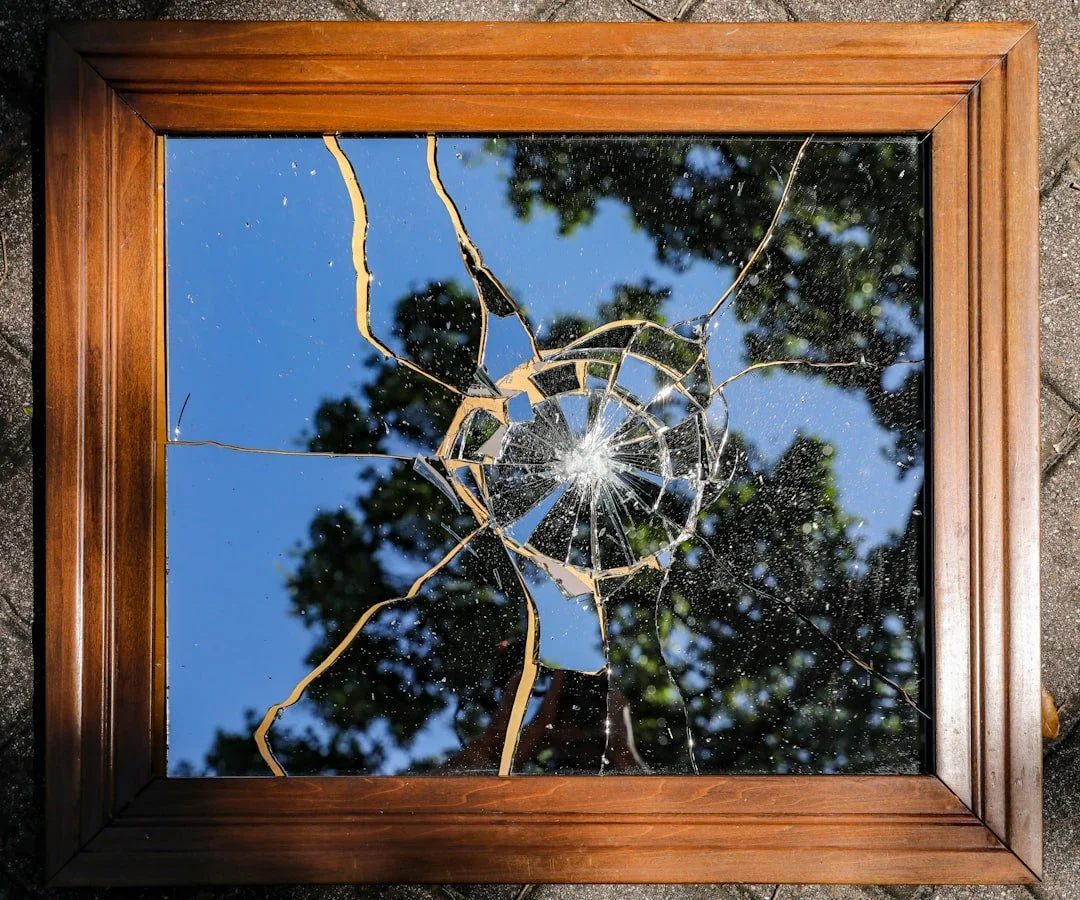
The mirror of the ideal always-good person is, for all of us, cracked. After decades of interacting with hundreds of therapy clients and dozens of close friends, I’ve come to believe that I’m part of the majority of folks: neither perfectly good nor hopelessly corrupt, but pretty good. Some people find this hard to believe about themselves. They hold on to a fantasy that’s been with them for much of their lives, the notion that they are exceptional, that they’re actually very good people. Such people are generally so self-absorbed and self-referential - main characters in theirs and everyone else’s story - that empathy and curiosity about others is virtually absent in their relationships. People who more closely approach the ideal of goodness are, in my experience, typically not absorbed in their own self narrative or their own self-aggrandizement, but are keenly aware of their own failings and shortcomings, and generous and understanding of those same tendencies in others.
When I was sharing this notion of pretty good with a close friend, she readily accepted this definition of herself, but when I observed that this standard also applied to both of her parents she stiffened, pursed her lips, and insisted that her father was better than that. He really was a very good person, she insisted. I know enough about her father to realize she holds this opinion as reason for her abiding love for him even several years after his death, but I also know that her experience of him as a daughter was anything but exceptional. We mythologize others and build them into avatars of goodness as a way of making sense of both the world we grew up in and the one we inhabit now.
So I’m not exceptionally good nor obviously evil, but pretty good, which is good enough for me at this point in my long life. What my own history teaches me is that my character isn’t static. I’m a moral work in progress, forever approaching or departing further from the ideal goodness that I will never achieve. The ebbs and flows of my own life also keep me on my toes: I am aware that I am never too far away from one impulsive act or decision that tumbles me back into that dark place I lived in for too long, a season in my forties and fifties when I was climbing out of the pit I was driven to leap into by my impulses. Lots of time and lots of good help allowed me to crawl up into this pretty good place.

My goal for whatever future I have, then, is not to be good, but to be better tomorrow than I am today. In his 1983 novella Worstward Ho, the Irish writer Samuel Beckett laid out what are now my marching orders into each tomorrow:
Ever tried. Ever failed. No matter. Try again. Fail again. Fail better.
I’ll never be Myshkin or Theo - I’ll never be always good - but I can be better than I am today.