

I’VE BEEN THINKING…
by Rick Thyne

I’ve been thinking about just adding water to the soup.
There are eight of us now in our immediate family: our son Brendan and his daughter Iris, who is fourteen years old; our daughter Shannon, her husband Chris, and their two sons, twenty-one-year-old Jesse and Joe, who is eighteen; and Becky and I (ages available upon request). We recently returned from our annual summer week in a rented beach house on Balboa Island, a southern California enclave in Newport Harbor. Lots of reading, 500-piece puzzles, paddle boards on the bay, surfing in the ocean, eating without discipline, and the best part: enough time for long conversations, whether one-on-one or around the large dining room table.
I've been thinking about slowing down.
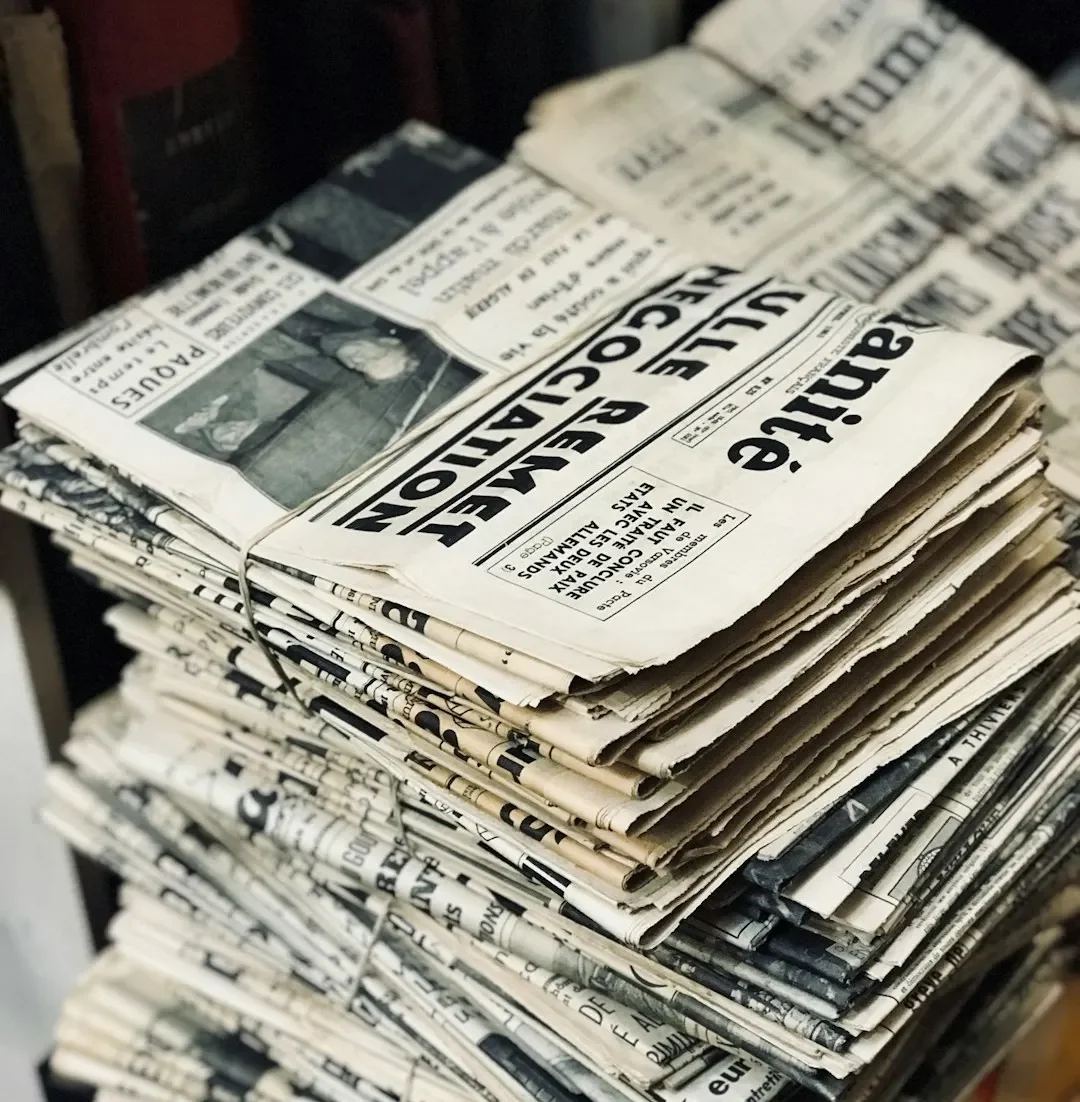
I was in my mid-thirties when my father died at sixty-nine. He had dropped out of Lowell, Massachusetts high school in the early 1920s, when he was seventeen, to enlist in the Navy, then left the service to work at odd job available to working class drop-outs. When the Great Depression hit, he couldn’t find work, so he hitchhiked to Hollywood where his brother owned a newsstand and had offered him a part-time job. He eventually bought the stand at Hollywood Boulevard and Whitley Avenue, sold newspapers and comic books, and secretly booked horse races for his street pals. He never made more than a subsistence living, and by his late sixties he was worn out. He finally died in 1975 when his kidneys failed him. At that time, I was healthy and married, had three children and a full career, and I somehow knew even then that my life was easier than his had been, and that I would likely outlive him by several years.

I’ve been thinking about polite conversations about impolite subjects.
Bob is a friend since college, now a retired but intellectually and politically active scholar in a university town in the east. For decades, his fitness routine has been to walk each of several generations of golden retrievers twice a day, often prompting conversations with fellow dog-walkers. In recent months, he kept joining mid-stroll with Dennis, a fellow retired scholar. As they walked, they talked about kids and grandkids and whatever esoteric tome each of them was currently plowing through. It was a frequent delight that warmed even the chill of winter afternoons.

I’ve been thinking about death and a long love story.
Mel died in January.
We met as new students at Princeton Theological Seminary in 1963 when he and Martha moved into a rural cottage down the street from ours. Soon we were walking down the dirt road to one another’s homes for drinks and dinner and the conversations Marty and Becky called a halt to when we started talking about eschatology and apocalyptic themes in the New Testament book of Revelation. They both had jobs while we studied most of the day, but on weekends Becky and Marty would shop together, share stories about the anguish of being married to men who worked for God, and knitted themselves into being best friends.

I've been thinking about what it's like to come out of denial.
Becky and I went to a church gathering on Saturday night. There were perhaps two hundred and fifty people there who are members of our congregation. It was a fundraiser for our ministry to the homeless in Pasadena, and we were there because Becky is deeply involved in that work. She spends half of every Monday distributing clothes and food and helping to supervise breakfast, showers, and haircuts. This was a dress-up celebration; the meal was good. I knew perhaps ten percent of the people in the room, and Becky knew everybody there.
I've been thinking about the portrait of a good person.
In the first pages of Allen Levi’s novel Theo of Golden, Theo, an 86-year-old man moves alone into the small Georgia town of Golden. For dozens of brief early chapters we find him engaged with every level of the small town’s citizenry: an injured and hospitalized little girl and her widowed father; a homeless women who roams the pages on her bicycle and insists on bringing it with her, even into church for a memorial service; a wealthy, worldly business consultant from whom Theo rents a lavish apartment; an ambitious cello student and a famous painter; an impoverished and self-pitying book seller and a young couple who’ve opened the coffee shop around which many of the stories revolve.

I've been thinking even more about where I’m smart and where I’m not so smart.
Even though I read Howard Gardner’s Frames of Mind: The Theory of Multiple Intelligences when it was published in 1983, I’d never actually done a survey of myself across his nine categories. The process has been very illuminating. I see myself now in particular ways, not just as an undifferentiated self who is smart (or not). It’s a relief to acknowledge where I’m not very smart - it’s a form of self-knowledge I’ve been reluctant to own because I didn’t want to look too closely at my limitations. It’s been equally satisfying to acknowledge the categories of intelligence where I am strong and claim them as gifts I can share.
I've been thinking about how I’m smart and not so smart.
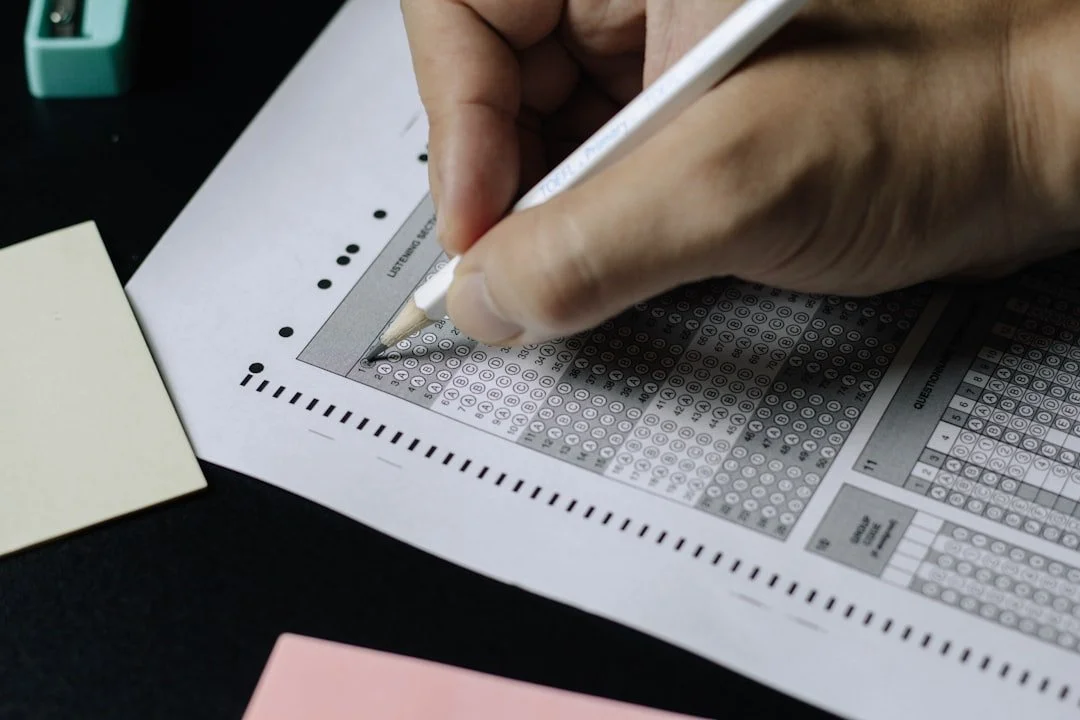
In 1983, Howard Gardner, a Harvard professor of education, published Frames of Mind: The Theory of Multiple Intelligences, which I read at the time. Gardner challenges the notion that intelligence can be adequately measured by our skills in language and math, which is what we test for in the SATs (Scholastic Aptitude Test) and a host of other standardized tests.

I've been thinking about my pursuit of happiness.
The longer I live – and I’m now almost halfway through my ninth decade – the more I see the wisdom in the first of the four great truths of Buddhism: The Truth of Suffering. For me, this does not mean that life is all, or even mostly, darkness and pain; it is rather an honest recognition of how hard life can be.

I've been thinking about what I can (and can't) figure out.
For about a minute at the breakfast table on Sunday, January 4th, I had trouble catching my breath. The problem recurred whenever I climbed the stairs, and more often on Monday. I should have called my doctor but didn’t. By Tuesday it reached the point that I got worried that something was wrong and should have dialed 911, but convinced myself that I could deal with it, hoping it would just disappear. By Wednesday afternoon I couldn’t breathe, thought I was going to die, and finally got to my doctor’s office; the first thing he did was call 911. I wound up in the emergency room of our local hospital with a severe case of Pulmonary Embolism, blood clots in both of my lungs. Once I got home from the hospital, I wrote in detail about the four days of increasing danger and my foolishness in not getting help.
I've been thinking about thoughts and prayers.
As mass killings in schools, shopping centers, a Las Vegas concert, synagogues, and elsewhere have proliferated, we hear the now-routine response, “our thoughts and prayers are with the victims and their families,” a phrase that has become an ugly social profanity. If the only thing we taught a newcomer to our country is that gun violence is now the leading killer of our children and teenagers, they would think with good reason that we are insane.
I've been thinking about the week I lost my breath.
January 4th is a lazy Sunday morning. No church for us because Becky’s choir isn’t singing, so we sleep in until after eight, then make our way downstairs to breakfast and the Sunday papers. As soon as I’m seated, I’m short of breath. This is weird!
I inhale deeply, exhale, repeat three or four times and my breathing is back to normal. I’m fine until after lunch, when I climb the stairs to the den and settle in to watch a football game. I’m short of breath again, as if climbing the stairs is a chore for my lungs. Again, three or four deep breaths and I’m back to normal. Then a minute or more at the dinner table to stop the soft panting. By bedtime I’m lying in the dark, my pulse too quick, breathing rapidly for two minutes, trying to fall asleep.
What’s going on?

I’ve been thinking about death and dying.
Our older grandson is a student at Brown University in Providence, Rhode Island. On Saturday, December 13th we got a text from his parents assuring us that he was safe during the shooting in a science building there. Two students were killed, nine others injured, but he was safely locked down with his roommates, as was his girlfriend with hers.

I’ve been thinking about books that mattered to me in 2025.
Fiction and non-fiction, new publications and older ones - here's what I read and loved in 2025.

I've been thinking about the week I lost my breath.
Well, so that is that. Now we must dismantle the tree,
Putting the decorations back into their cardboard boxes —
Some have got broken — and carrying them up to the attic.
The holly and the mistletoe must be taken down and burnt,

I've been thinking about a friend of my mind.
In the winter of 1959, our high school basketball team made it to the Los Angeles High School All-City Championship Tournament. In the first round we faced Jefferson High School, a perennial championship contender. To everyone’s surprise, we were down by a point and had the ball with seconds left when our best player was open with a jump shot from the corner. He took it, and missed: it bounced off the rim and out, the horn sounded to end the game and, exhausted, we shuffled to our bench.
Slouched with my teammates, I suddenly burst into tears, escalating into full-blown snot-nosed sobbing, repeatedly shouting No, no, no! Teammates, our couch, and our fans behind the bench went silent, staring, as I continued to sob and shout until I had emptied my emotions and wiped my wet face with my sweat-soaked jersey. To me it felt like hours; it was probably all of thirty seconds. Once I’d composed myself, no one said a word to me about my coming undone.
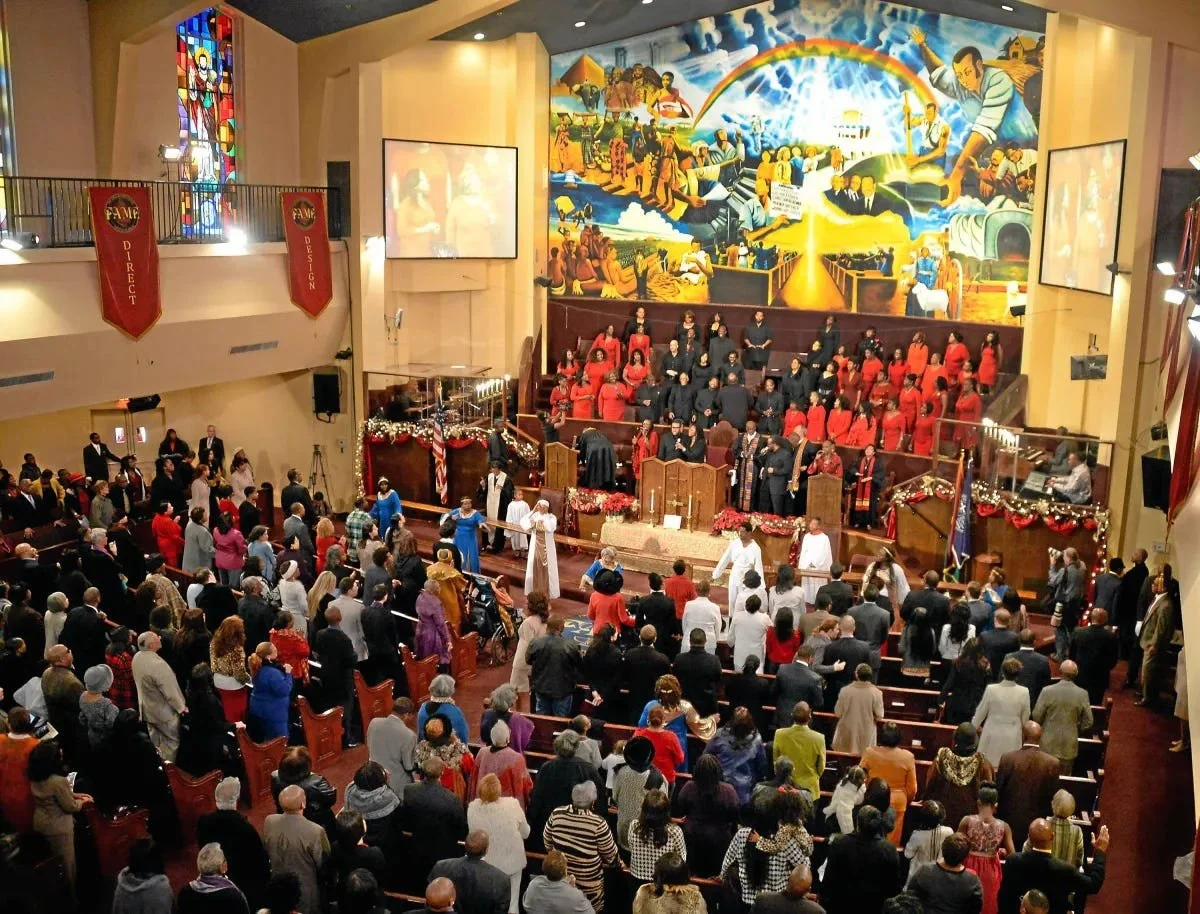
I've been thinking about my intense discomfort in Black spaces.
In the mid-1990s, for personal reasons, I left the white Episcopal parish I’d been a leader in for twenty years and began attending the robust, several-thousand-member progressive First African Methodist Episcopal church near downtown Los Angeles. I had grown up loving Black Gospel music, relished the emotionally expressive environment of Black worship, and thrived on the preaching of Cecil “Chip” Murray and his staff. We waved our arms as we sang, got down on our knees on the floor with our elbows on our pew to pray. The drummer in the worship band would play a brief rat-a-tat-tat when Chip hit a high point in his sermon, and we responded to preaching moments with Amen or Preach it. All of this was very much not like the more subdued worship of white Episcopalians.
I worshipped there for five years, but never really felt like I belonged. I was a visitor in a self-contained system and as much as I enjoyed being there, I was uncomfortable with how little attention was paid to my presence.

I've been thinking about clothes that don't quite fit.
If I wore them very low on my waist, the gray slacks I’d worn to my high-school graduation two years earlier almost touched the tops of my black loafers. The white shirt and tie were fine, so all I needed was a proper jacket. I’d been invited to a party with friends from the large college group at my church, mostly upper-middle-class kids, so I wanted to look my working-class best. I didn’t have a sports coat or the money to buy one, so I searched through the small closet I shared with my father and younger brother and found a suit jacket Dad seldom wore. It was dark blue with thin white pin stripes; the sleeves didn’t quite reach my wrists, but it would have to do.

I've been thinking about the history of authoritarianism in America that we don't talk about.
The rise of white Christian Nationalism in our country has prompted no shortage of comparisons to historical analogues. Although the most obvious example is Nazism in Germany in the 1920s and 1930s, similar movements have risen in Hungary under Victor Orbán and in Turkey under Recep Tayyiip Erdoğan. These dictatorships have erased in their countries many of the post-World War Two advances in democracy.
But we don’t need to look abroad to find predecessors to our current American moment. At the same time the Nazis were emerging in Germany, an autocratic, destructive organization sharing many of the same values and tactics was terrorizing communities here at home.

I’ve been thinking about adversity and agency.
My therapy clientele is mostly upper-middle-class and wealthy. I was aware of the first inklings in the mid-1990s of what became known as helicopter parenting. Moms and dads were often highly educated and experienced in managing careers and volunteer agencies. As parents, they exercised these skills with their children. If their child had a problem, they took parental pride in knowing the solution and providing it. If their child stumbled, rather than encouraging them to get up and brush it off they’d often pick them up, hug them as they whimpered more from frustration than pain, set them down gently, and let them continue playing.
Get the column sent
straight to your inbox.
Sign up to receive new columns via email as soon as
they’re published (and special offers, subscriber-only content, and some behind the scenes thoughts).
And as always - I hope you’ll reply to let me know what
you’ve been thinking!
You should receive your welcome email right away confirming you’ve been added to the mailing list. Let us know if you’re having trouble, and didn’t receive your welcome email.
Hi, I’m Rick Thyne and I’m grateful that you found your way to these pages. I’ve published two books in the past decade and along the way I’ve discovered that I really love to write. In the news and in so many conversations, I find issues I care about; so I’ve decided to write brief columns about these issues and to share them with you. I hope you’ll write back with your own thoughts and questions. Perhaps in this conversation we’ll find our way to more of the common good that is for me our best hope for a future in which all of us thrive. Thank you again for sharing in these conversations.