
I've been thinking about my pursuit of happiness.
The longer I live – and I’m now almost halfway through my ninth decade – the more I see the wisdom in the first of the four great truths of Buddhism: The Truth of Suffering. For me, this does not mean that life is all, or even mostly, darkness and pain; it is rather an honest recognition of how hard life can be.
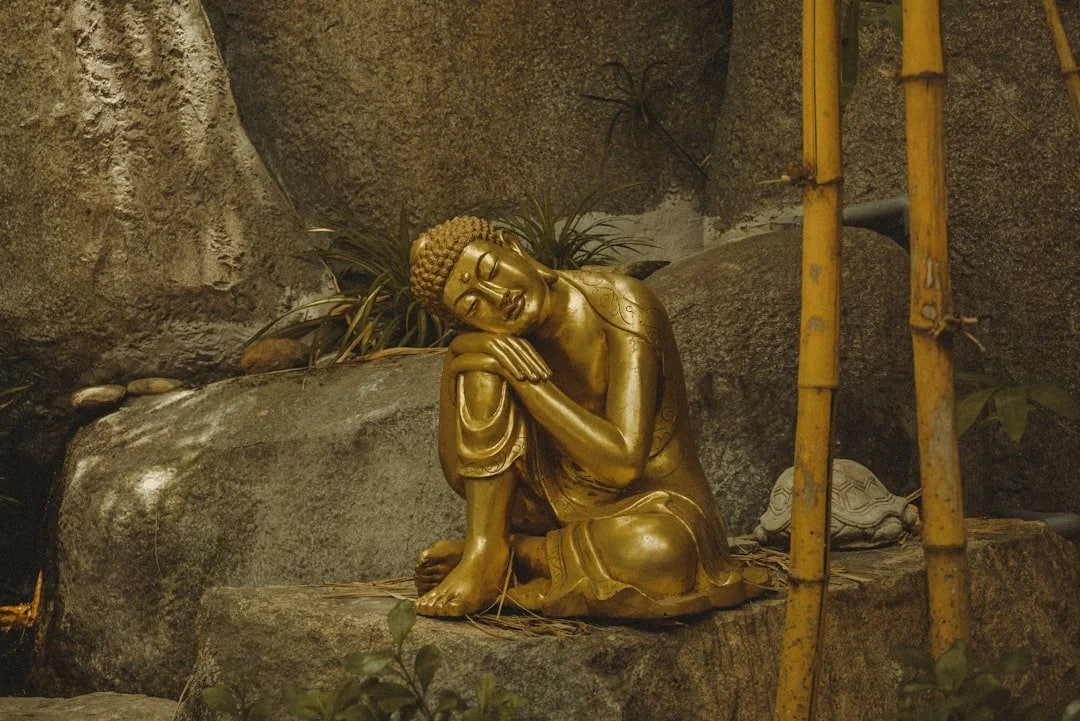
When the young Prince Siddhartha slipped outside of the isolation behind his family’s palace walls, he ran face first into harsh reality: an old man, a sick person, a corpse, and a wandering pilgrim. These experiences of suffering stayed with him when he became the Buddha and are codified as the first of the four great truths.
In the third chapter of the Hebrew Bible, Eve and Adam are beguiled by a serpent who questions the validity of God’s restrictions in the garden, which opens a conversation with their Creator about pain and death. This conversation becomes tragedy in chapter four when their older son, Cain, murders Abel, his younger brother.
The story of the birth of Jesus in Matthew’s Gospel includes King Herod’s fear that a recently born child might someday challenge him. In his fearsome rage, Herod slaughtered all the male Jewish children around Bethlehem who were two years old.
BECOME A FREE SUBSCRIBER TO I’VE BEEN THINKING

Such suffering is at the root of every generation’s honest story.
I live in privilege. I’m a straight, white, male with enough money to be comfortable and a nurturing community of family and friends. But reality bursts in, sometimes in our family or friendship circle, but more often in our wider human community.
In this cacophony of suffering, mingled with the first great truth of Buddhism, Genesis’s and Matthew’s seminal stories, and agony in the daily news, I recently re-read a poem by Jack Gilbert, “A Brief for the Defense,” from his 2005 collection, Refusing Heaven. I want to quote just one sentence from it that has embedded itself in my soul since I first read it. He writes:
We must have the stubbornness to accept our gladness in the ruthless furnace of this world.

In the mess of poverty and illness, of personal violence and war, of criminal leaders and wealthy enablers: we must accept our gladness in this world?
But this is what Gilbert asserts. And it doesn’t come in a cheery Hallmark card or one quippy sentence. Gilbert knows how much suffering and pain there is. Here are the poem’s opening lines:
Sorrow everywhere. Slaughter everywhere. If babies
are not starving someplace, they are starving
somewhere else. With flies in their nostrils.
I don’t know what it says about me that I ascribe as much sacred validity to Gilbert’s insistence on my gladness as I do to the wisdom of the Buddha, Genesis, and Matthew, but there it is, indelibly planted as true, as haunting and as indispensable as the holiest of texts.
A close friend in his nineties has been alone since his wife of sixty-five years died two years ago. During our long friendship, we’ve talked often about death and dying. Since we are both active Christians, these conversations have sometimes drifted into what we believe about life after death.

Recently we revisited this conversation, and it became clear that for him the only attraction to life after death is that he might be united with the love of his life. Neither of us cares much about choirs of angels endlessly singing Handel’s Hallelujah Chorus along streets of gold lined with an endless gourmet buffet. What we want is to be with people who’ve gone before us, especially the ones we have never stopped loving. I want to dance with my mom, settle things with my dad that we never talked about. I want to put my arms around the broad shoulders of our son Jesse, kiss my brother-in-law Marty who taught our family how to express love, and let my brother Stephen explain the addict’s life that killed him at thirty-nine. My little sister Kathy died a year ago; I want to be over missing her when I see her again.

I realize that the gladness that I now experience in the face of all the suffering in the world centers on that same experience that would make eternity worthwhile: connecting with people I love who love me.
Becky and I have been a couple for sixty-seven years, married for sixty-three of them; we’ve raised three children and now share delight as grandparents with our three grandchildren. No angel chorus is as beautiful as the chatter around the table at our weekly family dinners.
I had a ninety-minute breakfast this morning with a man who has been my friend since we were young boys. We have seventy-five years of memories that stitch us to one another like brothers.
Six times a year, Bob and Susan drive Becky and me to Disney Hall for evening concerts by the Los Angeles Master Chorale, and we always have a 9:30pm dinner reservation at some favorite restaurant after the concert. It’s our constant friendship’s sacramental ritual.
For thirty-five years I’ve shared ninety minutes every other Monday morning with a group of men who’ve experienced together the best and the worst of what life brings over that many decades.
I’ve spent Friday mornings with Jeff for forty-four years, at first playing tennis but now contenting our aging selves with long, honest breakfast conversations.
For over thirty years I’ve had two-hour Thursday lunches with my therapy colleagues, half of which we spend catching up on personal stories and the other half helping one another be better professionals. How wonderful to have a workplace in which we love each other deeply!
We have a faith community that reached out to support me when I was recently ill, as it has reached out to us in such circumstances for forty-five years; provides me with inspiration and the challenge to do justice and love mercy; and bears regular witness to the Jesus who lives for me in the Gospel stories by and about him.
While acknowledging the sad truth that each of us suffers throughout our lives, I claim the truth that the people I love who love me slide their affection into my life with a consistency that matches all the pain. I weep and rage at the suffering, mine and others’. But I’ve also learned to allow myself the joy that comes with Gilbert’s wisdom: We must have the stubbornness to accept our gladness in the ruthless furnace of this world.