I’ve been thinking about how much I hate Donald Trump.
I hate Donald Trump because he is an evil person.
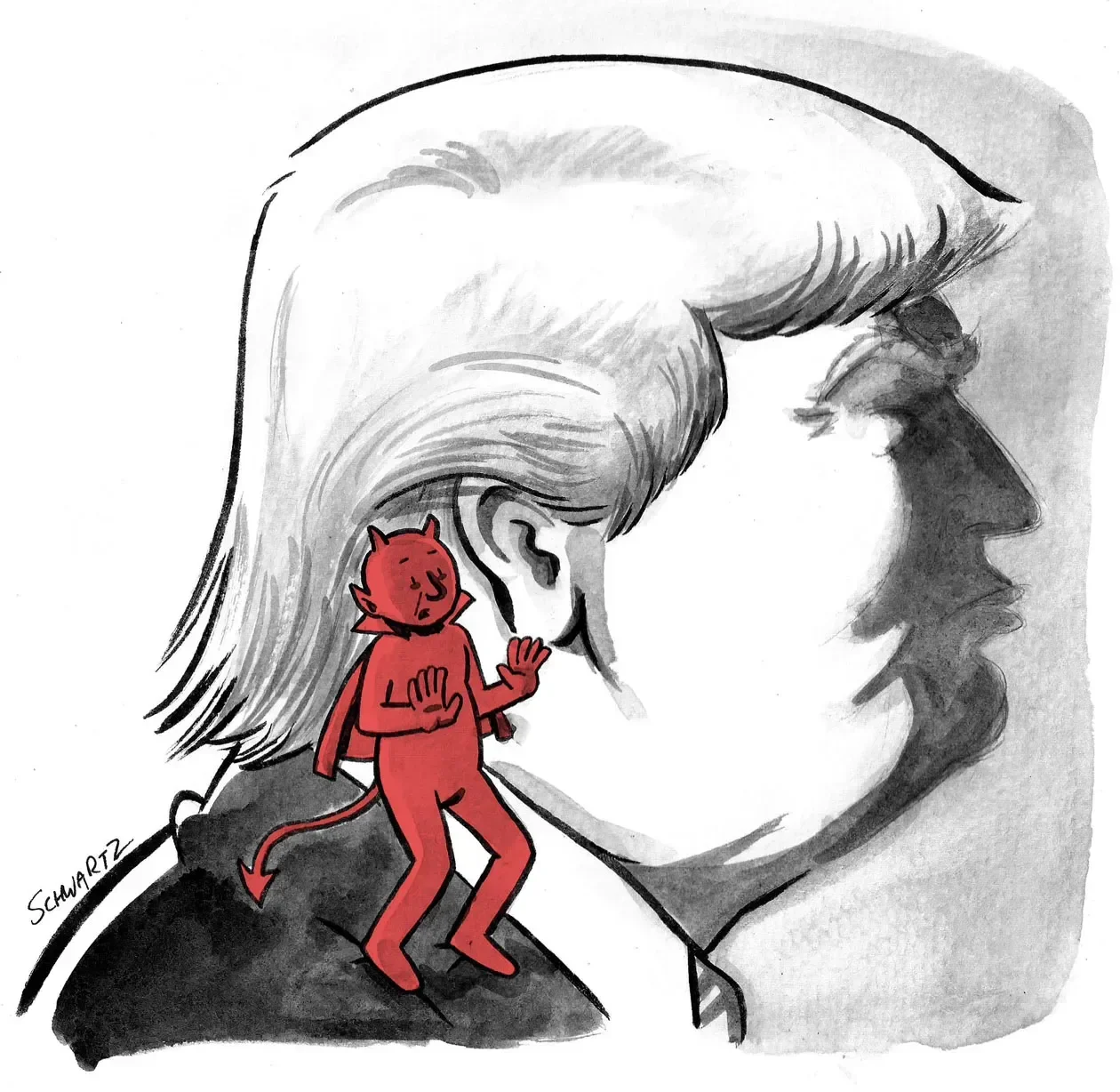
“Whoa, Donald—you’re scaring me, man.” The New Yorker
Though I’ve only loathed a couple of other people in my life, Trump has earned my contempt and I’m comfortable sharing the fact that I hate him. It’s not just that I find him ignorant and bigoted, grossly self-indulgent and unable to distinguish truth from lies. He is an evil person. He’s far past being a malignant narcissist; he’s a sociopath, someone so lacking in conscience and moral stability that he will sacrifice anyone to achieve his self-aggrandizing aspirations.
He separates children from their parents and puts them in chain-link cages while sending their parents to unlivable detention centers and deportation to far-off countries. He cut off USAID funding for AIDS relief mostly in southern Africa, which in less than two years has resulted in the deaths of an estimated 700,000 people, 500,000 of them children. And on and on.
What I’m less comfortable with is the way in which my hatred of him is leaking into my character and polluting my sense of myself. It’s not just that I read and watch reports of his latest malevolent acts, as many of my friends do. I’m worse than this. Three or four times a week I lie awake at 3:30am, laying out my arguments, point by point, for rebutting his latest insanity, strategizing his political demise.
Is this my own personal rendition of Trump Derangement Syndrome? I cannot stand the thought that I’ve given him a rent-free apartment in my mind. I’m too old for this; I need my sleep.
Additionally, I find myself sliding toward hating people who support and defend this corrupt man. They so often attach Trump’s name to their politics and creeds that in my mind they become him, or at least so associated with him that I do not make a distinction. But faced with the prospect of a real human being whom I know in real life, my conscience begins to slap me across the face.
So I continue to strongly disagree with them and to hate what they support. But I do not think they are evil sociopaths, nor do I hate them (though I must admit a few of them test this limit for me).
When I find the patience to think more soberly, I recognize that most of these Trump voters are broadly like me in many ways: products of their growing up, working their butts off to love and support their families, voting for those things they hope will let their children thrive as healthy, educated, deeply respected human beings. These are of course the very hopes I have for my children and grandchildren and the families of those who think and act and vote like me.
As the November midterms approach, I’ve finally acknowledged the impact of my daily (and middle-of-the-night) ruminations on hating Trump. Why do I find myself in this humiliating posture?
My default response would be that there’s something emotionally wrong with me. What flaw in me has allowed this hostile takeover of my psyche? Decades of therapy and my friends’ and peers’ acceptance of me as sane and responsible makes me doubt this as the core of my loathing. By most renderings, I’m a pretty healthy old man.
I think I’ve found a likelier candidate as the source of my derangement. I finally realize that my intense hatred comes from watching this privileged bully punch down on people he sees as beneath him. With his wealth and social status, with his power to manipulate the lives of people he considers inferior, he reaches down with his power and abuses them: immigrants and people of color, Jews and Muslims, women and LGBTQ+ folks. People he thinks of as less than him.
People like my dad.
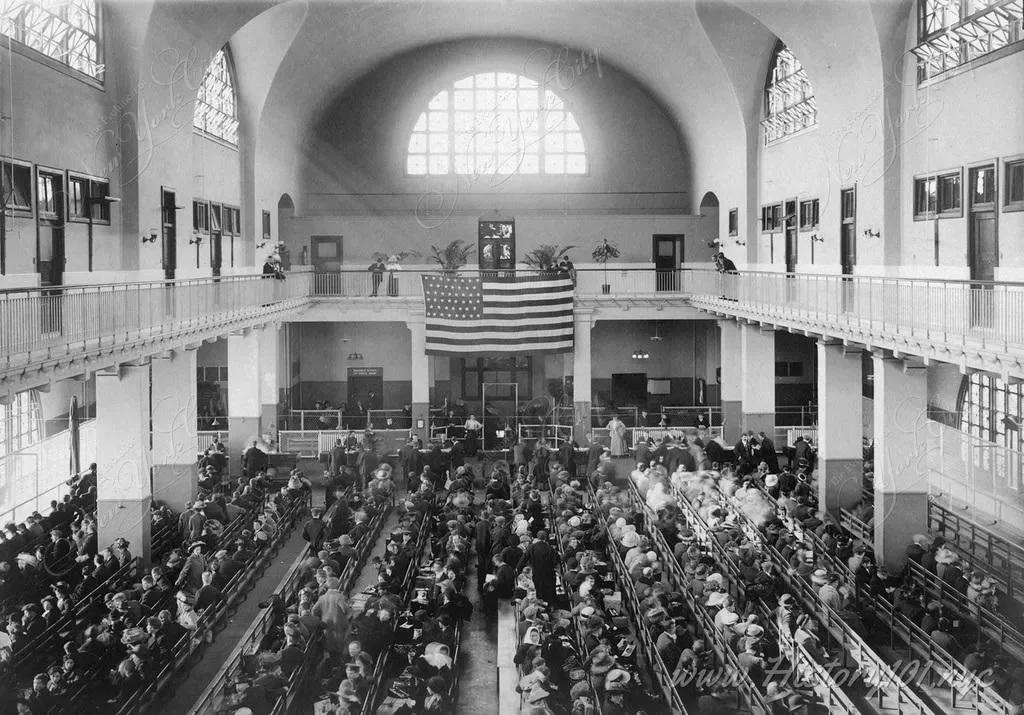
Main Hall at Ellis Island’s Immigration Station - NYC in 1902, history101.nyc
His immigrant parents came from famished Ireland early in the last century, to Boston where he was born in 1906. His mother died when he was a boy and, to help him raise four children, his father quickly married a woman who soon established an untenable stepparent relationship with my dad.
He dropped out of high school to join the Navy in the early 1920s, was discharged from the Navy and spent the rest of his twenties and thirties scraping an unskilled working-class living out of a depressed New England economy. He hitchhiked to Hollywood in the late 1930s, married my mom whom he met in a shared boarding house (she slept on a daybed in the dining room, he shared a room with a man upstairs), and spent his life earning just enough to feed and clothe five kids.
His poverty is hard to wrap my mind around but fundamental to understanding his experience. For perspective, I remind myself that I’ve earned more in each of the past thirty years than he earned in his entire lifetime. Grinding work and relentless worry about where our next meal might come from eroded his soul and finally killed him when he was sixty-nine years old.
When I read again about immigrants and working-class folks and marginalized children harassed, arrested and deported by ICE, I see my dad’s Irish mug on each of them. They are like him as he was like them: ordinary people whom the powerful and privileged can bully. When I realize that Donald Trump is punching down on people like my dad, my hatred for him becomes incendiary.
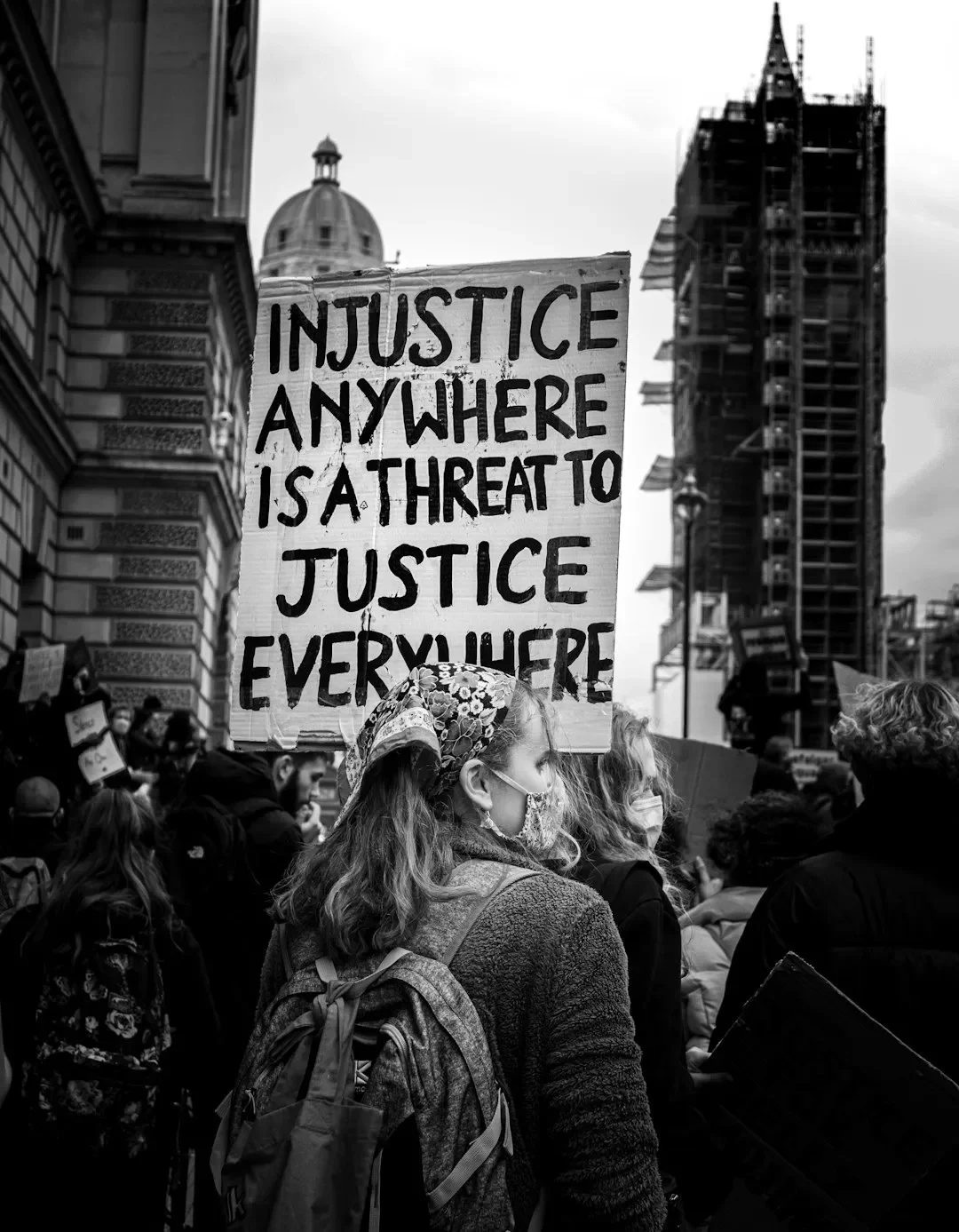
It’s not just my dad. My identity as an American and my Christian faith are both based on a dynamic of punching up, of battling privileged elites on behalf of regular people.
As a refreshment to whatever my personal patriotism means, I read the Declaration of Independence every Fourth of July and am annually surprised that only the first paragraphs outline our commitment to the equality of all persons and our common rights to life, liberty, and the pursuit of happiness. Much of the remainder is a long list of indictments of the King of England for exercising absolute tyranny over his American subjects. Which is to say, the Declaration punches up, not down. On behalf of people with less power, it dares to slap the King in the face.
I’m a follower of Jesus of Nazareth who spent his ministry punching up at the religious and political tyrants who abused and oppressed people like him. He kept company with the poor (he was one of them), wrapped his arms around the sick and morally compromised, drew women and children into his community of Beloveds. He expressed his hatred for privileged bullies in words and action. He called them whitewashed tombs, bright on the surface but dead inside. He toppled the tables of moneychangers who turned ritual sacrifices into opportunities to fleece poor worshippers and stood face to face with Roman authorities to challenge their arrest of him.
Even though I spent about an hour in the middle of last night plotting, I do feel less intense these days. I can tell myself, when my hatred flares, that it’s the vision of Trump punching down that stirs me and talk myself through the feeling, setting aside my brilliant point-by-point rebuttals and my sturdy stance on the moral high ground until I’m asleep again.