
I’ve been thinking about the epic and the ordinary.
Last Christmas, our older grandson Jesse was home midway through his second year of college on the east coast. In a conversation during a seasonal family get-together, he and I were talking about books. It’s a common subject for us. Since his mother was a freshman in high school, I’ve read the books assigned to her, our two sons, and now our two grandsons for their English literature classes. Our granddaughter is in her first weeks of high school, and I’m already pestering her for titles.

Jesse and I were talking about essential reading, books that are foundational for our understanding of where we come from, and how we got to be who we are. I asked if he’d read The Iliad and The Odyssey, Homer’s poems from eight centuries before the birth of Jesus. He hadn’t, so a week later I gave him both books as Christmas presents.
I’ve had my own journey with Homer. Many of my friends, both current and past, read at least excerpts from one or both classic myths in high school or college. I wasn’t much of a student in high school and somehow missed the ancient history or literature college classes in which they were assigned. As I cruised through my twenties and thirties, I got master’s degrees in theology and psychology but again, no Homer. Even with my fresh academic credentials, I had the lingering sense of my educational limitations reaching back to my high school and college years. I felt I wasn’t as intellectually credible as many of my peers, and when one of them asked me how I could possibly feel this way, I vividly remember saying, I’ve never read The Iliad or The Odyssey.
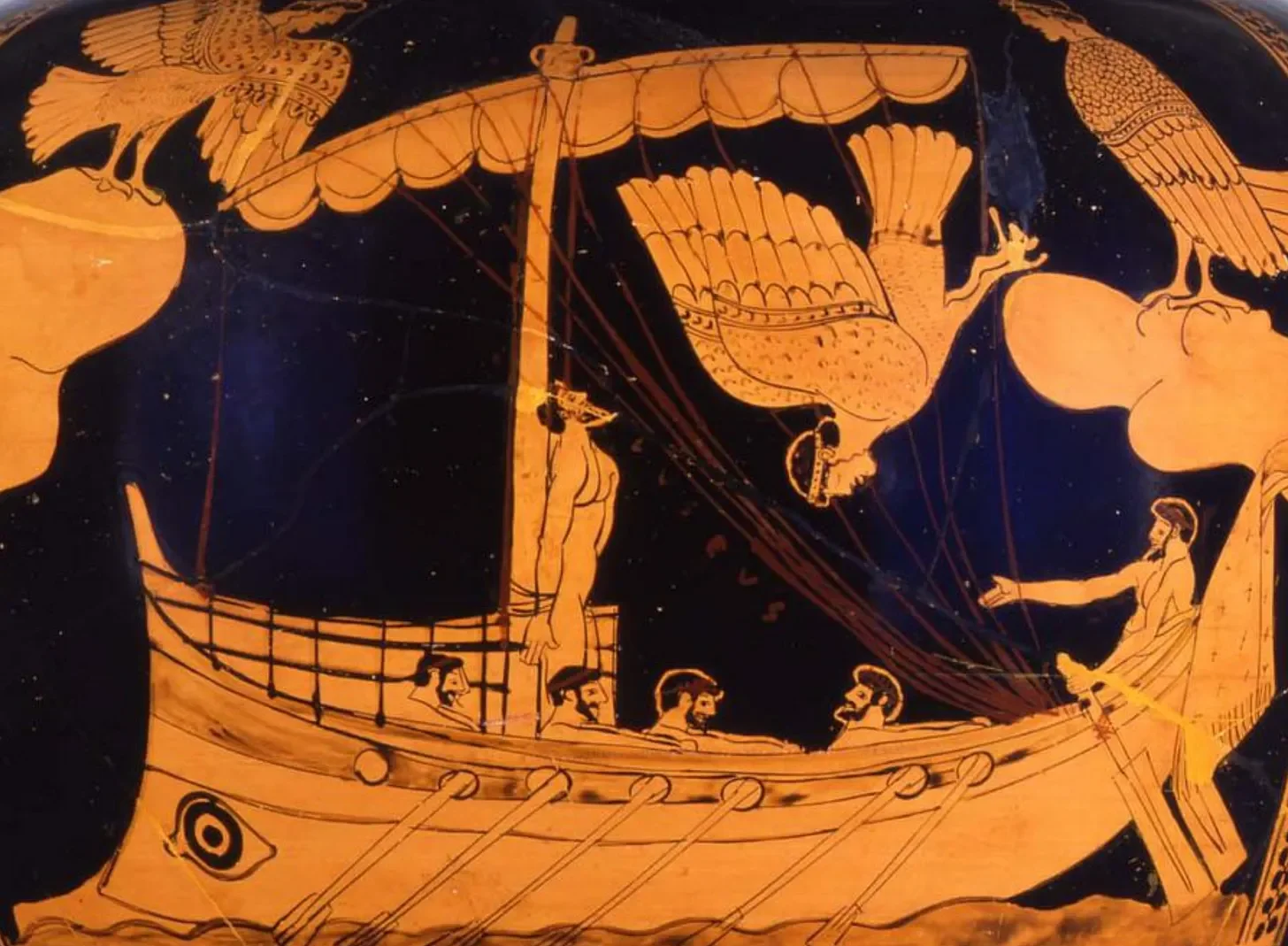
Red-figured Greek vase, c. 480BC-470BC, depicting Odysseus and his ship passing the sirens (British Museum)
In my forties, tired of whining about my educational deficiencies, I spent weeks one summer reading through both of them.
I’ve never reread The Iliad after that initial encounter. I found its violent warriors and their use and abuses of women too much of a valorization of centuries of patriarchal definitions of masculinity. I didn’t need one more battle, one more scene of slaughter, one more celebration of the most vicious and dominant men. There’s no question that violence and war are very present with us today, but I can’t celebrate it.
But I got addicted to The Odyssey and read it again and again through the ensuing decades. It is a deeply felt and beautifully conceived tale of the pleasures and pain, the victories and defeats, the courage and the cowardice of the journey we all make as we find our way to whatever home finally awaits us.
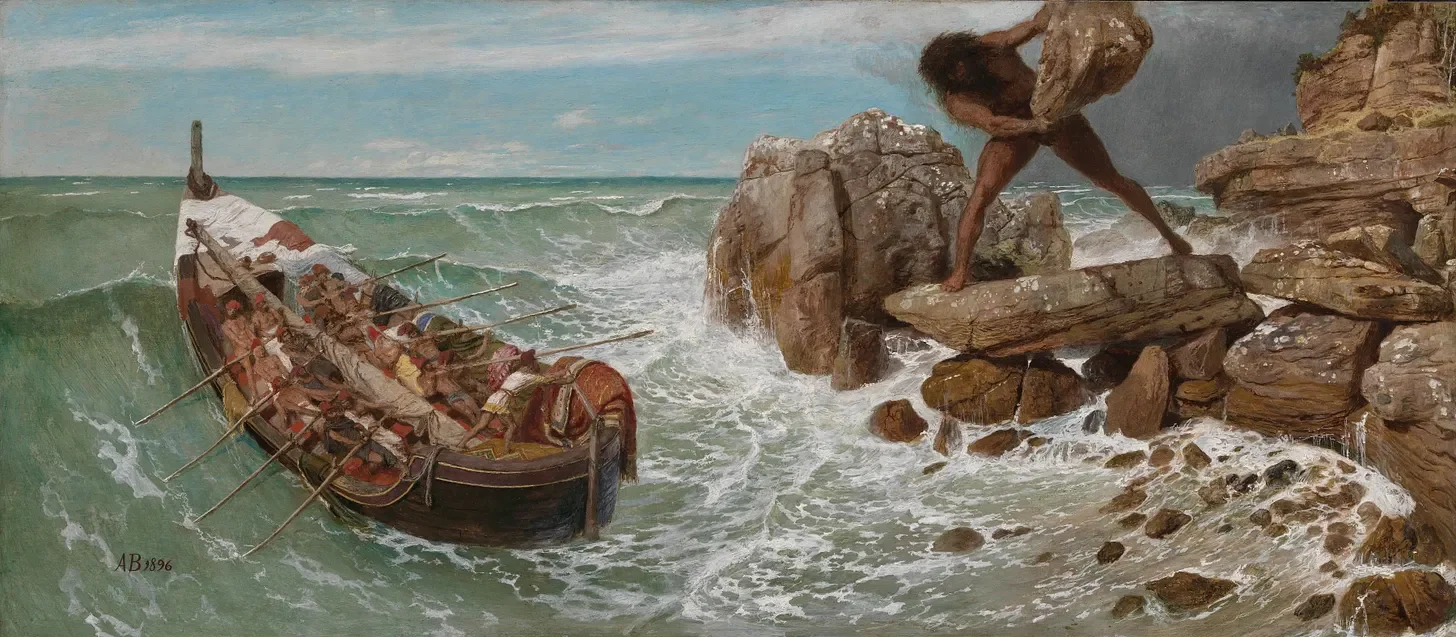
Arnold Böcklin, Odysseus and Polyphemus (1896), oil and tempera on panel (Museum of Fine Arts Boston)
When our younger son was in high school, I read his English lit assignments with him and in his junior year he shared with me Alfred Lord Tennyson’s indelible 1833 poem Ulysses, Tennyson’s rendering of Odysseus after he’s arrived home. Grown bored with ruling Ithaca, Odysseus decides to find his oarsmen and go to sea again. I read it frequently as inspiration, a reminder that age is no barrier to adventure. Here is a brief portion of it that contains language that may be familiar:
Come, my friends,
‘Tis not too late to seek a newer world.
Push off…
Tho’ we are not now that strength which in old days
Moved earth and heaven, that which we are, we are;
One equal temper of heroic hearts,
Made weak by time and fate, but strong in will
To strive, to seek, to find, and not to yield.
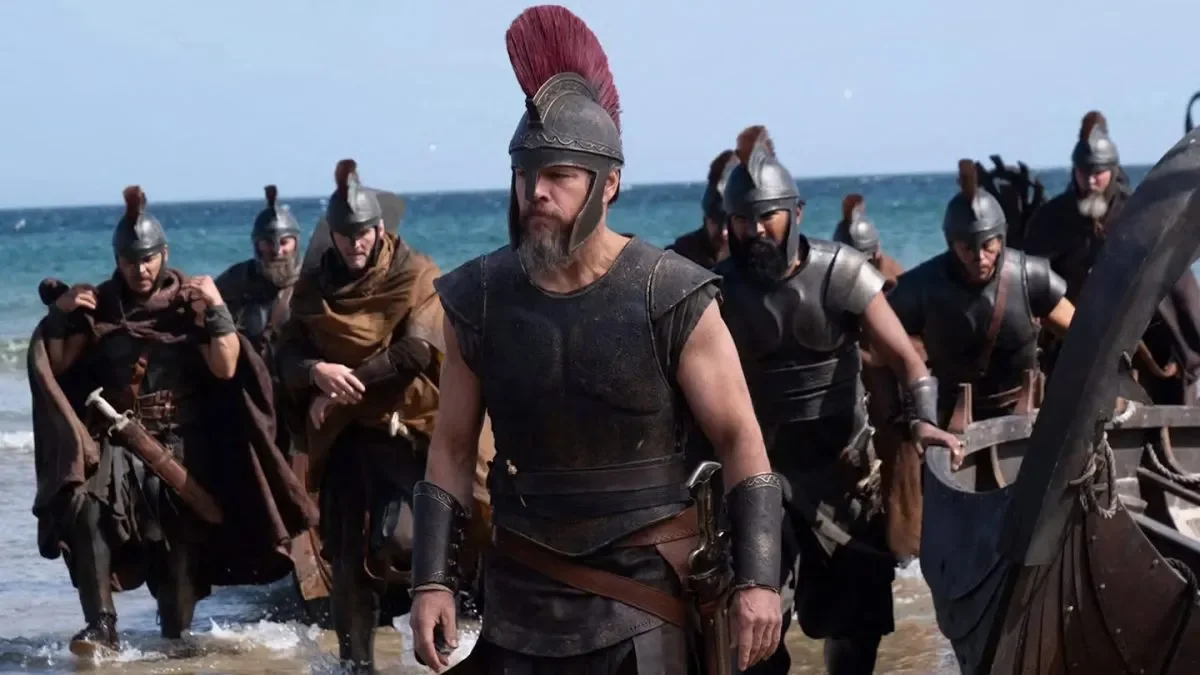
When Jesse came home this year at the end of his spring semester, he was just finishing The Iliad. Around that same time, ads were appearing everywhere for the opening of Christopher Nolan’s film of The Odyssey, so we decided to read the long poem and then see the film together.
We went on a Monday night to a sparsely filled small theater and spent over three hours in the dark with Odysseus. It was so late by the time the film ended that we had just a brief exchange on our way to the parking lot and agreed to talk at a length at a later time.
In late August, when he was headed back to school, I volunteered to take him to the airport, and agreed again even when he told me his flight left from LAX at six a.m., which meant I’d have to pick him up at 4:15 a.m. He called at 3:50 that morning to wake me, and we set out in the dark on empty freeways. At last, we had time to talk about the movie, journeying through the darkness like oarsmen on the wine-dark sea.
We agreed that we were caught up in the endless action: storms and battles, Cyclops and Charybdis and Scylla, Circe’s witchery and Calypso’s numbing charms, his final arrival home to Ithaca, Penelope, Telemachus, and a final slaughter of the men who’ve been feasting on his food and wine for ten years while trying relentlessly to seduce Penelope. We both recognized that the script had changed Odysseus from the poem’s warrior hero to a guilt-ridden modern man, in his case because he’d come up with the idea of the Trojan Horse that allowed him and his Greek warriors to enter the city of Troy and slaughter the enemies they’d been in battle with for a decade. Unlike Homer’s hero, Nolan’s Odysseus couldn’t forgive himself for his violence.
Then Jesse said something very interesting. “It was hard to like Odysseus in the poem,” he said, “because he was such a ruthless killer and, though he was finding his way home to what he assumed was a pure Penelope, he and his men had random, dominating sex with the girls and women of every place they landed, not to mention his affairs for two years with Circe and seven years with Calypso.”
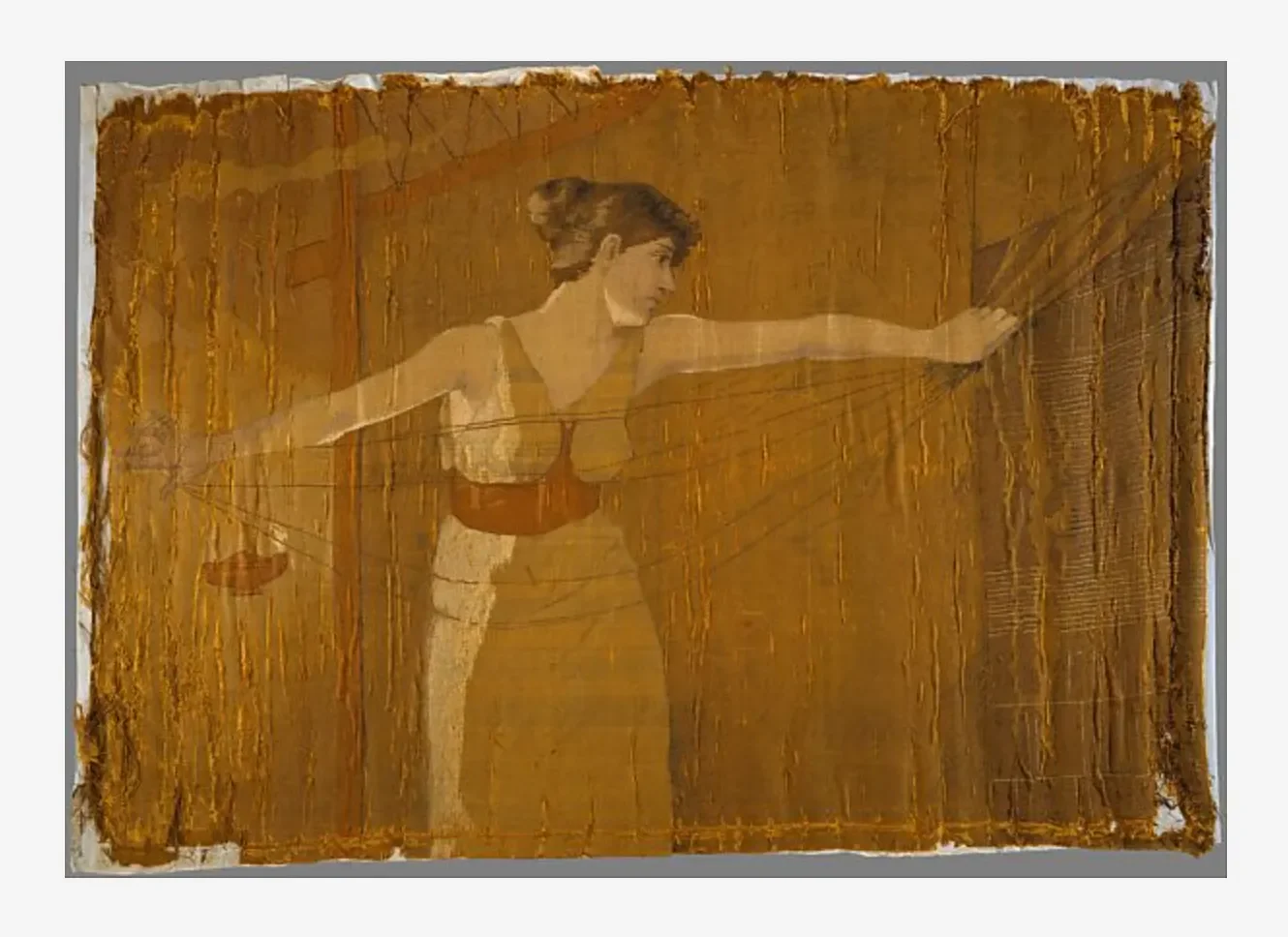
Dora Wheeler, Penelope Unraveling Her Work At Night (1886), Large-scale needlewoven tapestry (Metropolitan Museum of Art)
“The film was different,” Jesse went on. “There was never a sex scene, and the slaughter was never gross like it was in lots of films and video games.”
I hadn’t thought of it in those terms, but he was right. In addition to leaving out the grossest violence and sexual encounters, Nolan scrubbed the poem clean of most of the Greek gods and didn’t use up much directorial time on the gluttony that fills the poem. Homer’s poem operates on a grand scale: Odysseus is an epic hero, his enemies are outsized monsters, his passions for food and war and women are enormous, and he regularly satisfies each of them. In the film, Odysseus is a troubled human being. His appetites and passions are accessible at a personal level. He’s easier to relate to in the film than the outsized hero of Homer’s poem, and what made the film interesting was to imagine an ordinary man faced with – and finding himself equal to – extraordinary challenges.
A few minutes after 5am, I stopped at the curb in front of the Jet Blue terminal, Jesse hugged me and said, “Thanks for getting up so early.” He dragged his backpack and a small carry-on out of the trunk of my car, and disappeared through the glass doors into the surprisingly busy terminal to continue on his journey.